

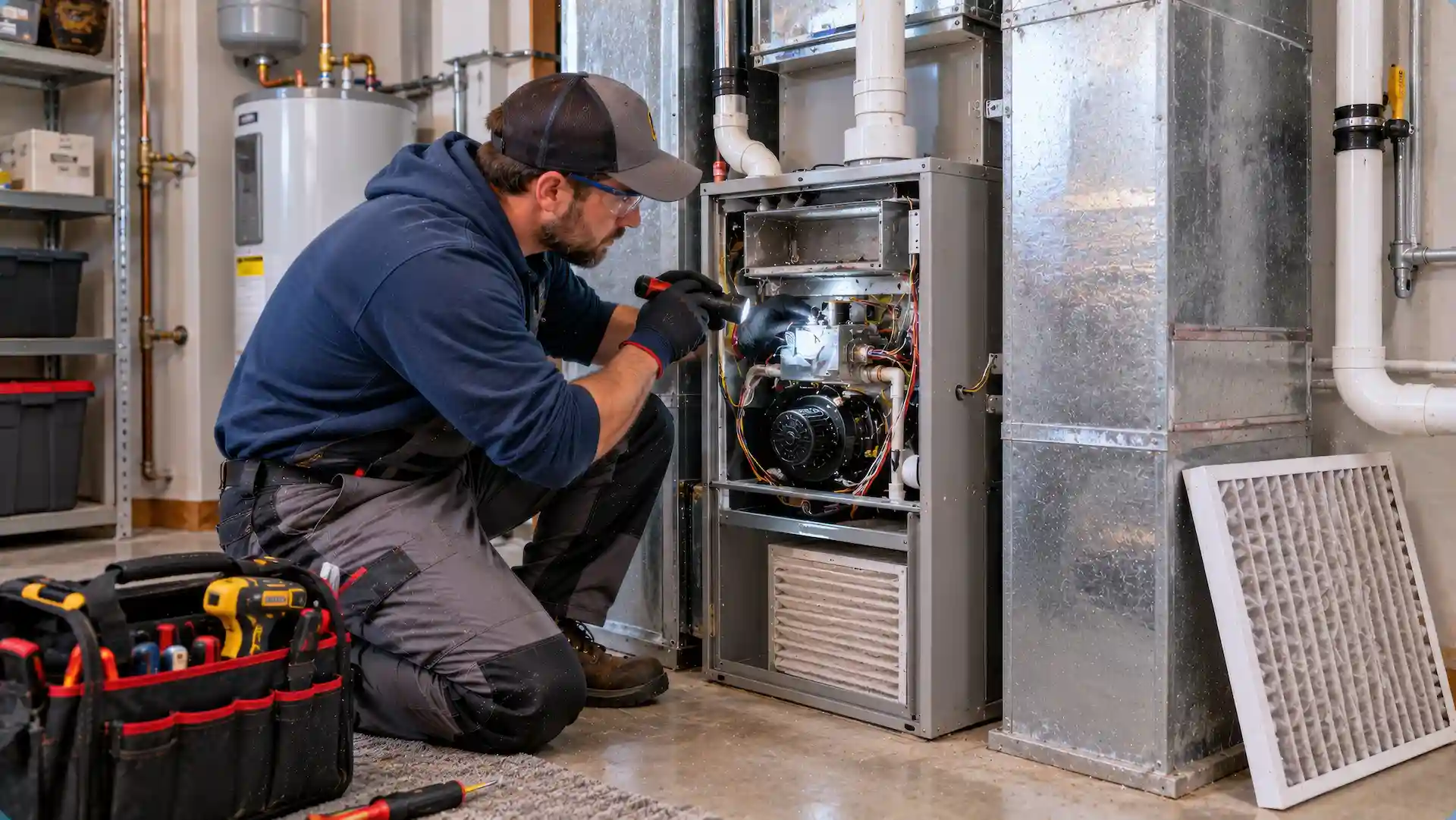
The heater is running, but you are still reaching for another blanket. Maybe the whole house feels chilly, or the living room is comfortable while a bedroom never seems to catch up. Before turning the thermostat higher again, notice where the warmth is missing.
For homeowners in Waco, Temple, Killeen, and Belton, that distinction is a useful starting point. A furnace that is not producing heat needs a different investigation from a system that produces heat but cannot deliver it evenly. Here are five things to know when your heater runs but your house stays cold.
1. “Running” Can Mean Several Different Things
The sound of moving air does not necessarily mean your system is actively heating. On many thermostats, the fan’s “On” setting keeps air circulating between heating cycles. That air can feel cool even though the fan is doing exactly what it was asked to do.
Check that the thermostat is set to Heat, then compare the room-temperature reading with your selected temperature. Review its schedule and any temporary hold. If your equipment instructions recommend Auto fan operation, confirm that setting too. Do not change installer settings or remove thermostat wiring.
If the display does not match the settings you expect, or the system repeatedly ignores a call for heat, thermostat service can help determine whether the control or another component needs attention. Raising the setting repeatedly will not identify the cause.
2. A Cold House and One Cold Room Are Different Clues
Take a quick walk through the house. Is airflow weak everywhere, or only at particular registers? Are the rooms farthest from the equipment noticeably colder? Did the problem begin suddenly, or has the same room been uncomfortable for several winters?
If the whole house is below the set temperature, begin with accessible basics: thermostat settings, the air filter, and blocked supply or return grilles. Follow the equipment instructions when checking or replacing a filter. Use the specified size and type, and never operate the system without it.
If just one room stays cold, move furniture, curtains, and rugs away from its registers and return grilles. Notice whether closing the door changes its comfort. These observations help explain the problem; they do not establish a diagnosis.
Leaky or poorly connected ducts can lose heated air before it reaches the room. Insulation and air leaks around the house can also affect comfort. Ask about air duct inspection and repair when uneven temperatures persist. Leave attic and crawlspace investigation to a professional rather than climbing in to look for damage.
3. Your Heating System Changes What to Expect
“Heater” is a broad description. A gas furnace generates heat through combustion. Electric resistance heating uses electrical elements. A heat pump moves heat into the home, and some systems combine a heat pump with another heating source. Ductless mini-splits equipped for heating also use heat-pump technology.
A heat pump’s supply air can feel less hot than furnace air while still warming the house. Judging it with your hand alone can be misleading. Pay attention to whether the indoor temperature is moving toward the setting and whether operation has changed from the system’s usual behavior.
If a heat pump is running without maintaining comfort, describe that specific symptom when requesting heat pump service. Do not assume that furnace troubleshooting instructions apply, or switch to emergency heat simply to experiment. Follow the equipment’s operating instructions.
For a ductless system, note which indoor unit or room is affected and the mode shown on its controller. That information helps distinguish a single-zone concern from a broader heating problem.
4. Frequent Stops Deserve Attention Too
A heater that starts, stops, and starts again before the house warms up may have an airflow or control problem. A clogged furnace filter can restrict airflow and contribute to overheating and protective shutdowns. Other faults can produce similar symptoms, so a filter change is not proof that the underlying issue is resolved.
Write down the pattern without opening equipment panels: whether air starts warm and turns cool, whether the thermostat shows an alert, and whether the same behavior repeats. Avoid repeatedly resetting the equipment or circuit breaker to keep it running.
If the system cannot maintain temperature or continues shutting down, request heating and furnace repair. Internal electrical checks, ignition work, refrigerant service, and safety-control testing belong with a qualified technician. Never bypass a safety switch.
5. Repair, Maintenance, and Replacement Answer Different Questions
An active heating problem needs diagnosis. Routine maintenance is useful for equipment care, but it should not stand in for reporting a heater that is malfunctioning. When booking, describe the symptom rather than asking only for a tune-up.
Once the immediate concern is addressed, furnace maintenance provides an opportunity to review filter care and the system’s ongoing service needs. Ask which checks are appropriate for your equipment and what additional work, if any, is recommended.
A cold room alone is not a reason to choose a bigger furnace. If replacement is being considered, the assessment should account for the home’s heating needs and distribution system. Discuss those factors when reviewing furnace installation and replacement options, rather than choosing equipment by size alone.
Know When to Stop Troubleshooting
If a carbon monoxide alarm sounds, get everyone outside to fresh air immediately and call 911. Do not re-enter until emergency responders say it is safe. If you smell gas, leave immediately without operating switches or using a phone inside, then call 911 and your gas utility from a safe location.
Help Us Find the Missing Warmth
When you contact Lochridge Priest Home Services, share your city, the heating system type if you know it, which rooms are affected, and any thermostat alert. We serve Waco, Temple, Killeen, and Belton. A clear description gives our team a better starting point for investigating why your home is not warming as expected.